
TILING AND FLOORING · MELBOURNE
Tiling and flooring are the hands-on skills behind most of the bathroom, kitchen and laundry work I do. I’m Ivan Bodnar, an independent renovation specialist working as a sole trader in Melbourne. I lay the tiles myself, and I start with the surface they go on.
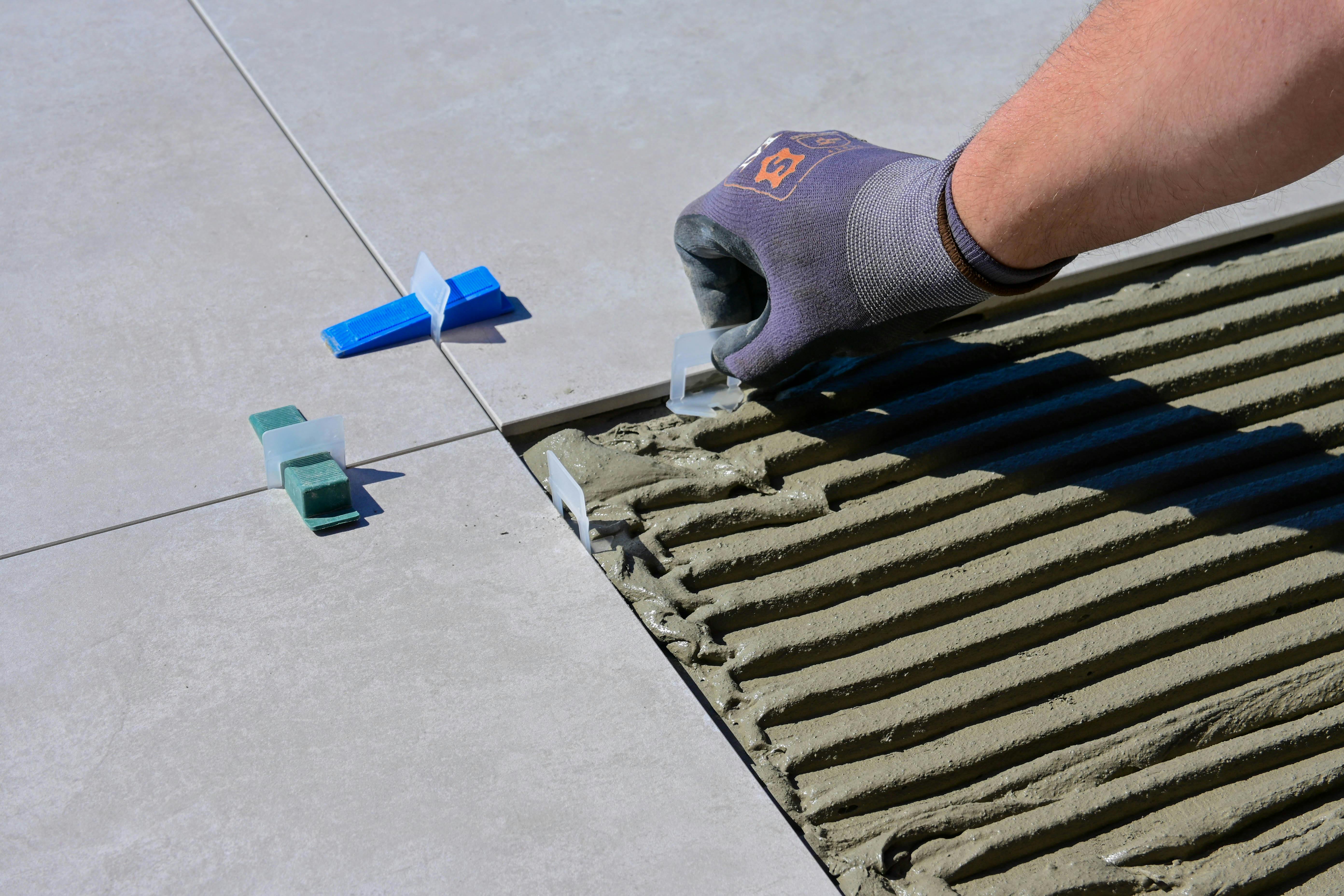
A large floor tile lowered onto freshly spread adhesive, with tile spacers beside it.
0413 142 055 · 9:00–18:00, Mon–Sun
04 / Tiling and Flooring · What the work involves
01
FIELD 01 · BEFORE A TILE GOES DOWN
Most tiling problems you see later — cracked grout, loose or drummy tiles, edges that catch your foot — start before any tile is laid. Good preparation matters just as much as the visible finish, so this is the order I work in.
A · SUBSTRATE
The floor or wall has to be clean, firm and stable. Loose old tiles, flaking paint or damaged board get dealt with first, because adhesive only holds as well as the surface it’s bonded to.
B · SETTING OUT
Before anything is mixed, I work out where the lines fall. That means where the first row starts, where the cuts land and how the layout meets doorways and walls. Careful setting out avoids thin slivers at the edges.
C · ADHESIVE BED
Adhesive goes on with a notched trowel that suits the tile size. That way each tile is supported across its whole back, not just sitting on a few lumps. Spacers keep the joints even.
D · CHECKING LEVEL
I check with a spirit level and a straight edge as I go, row by row. That keeps the finished surface flat and stops neighbouring tiles catching the light at different angles.
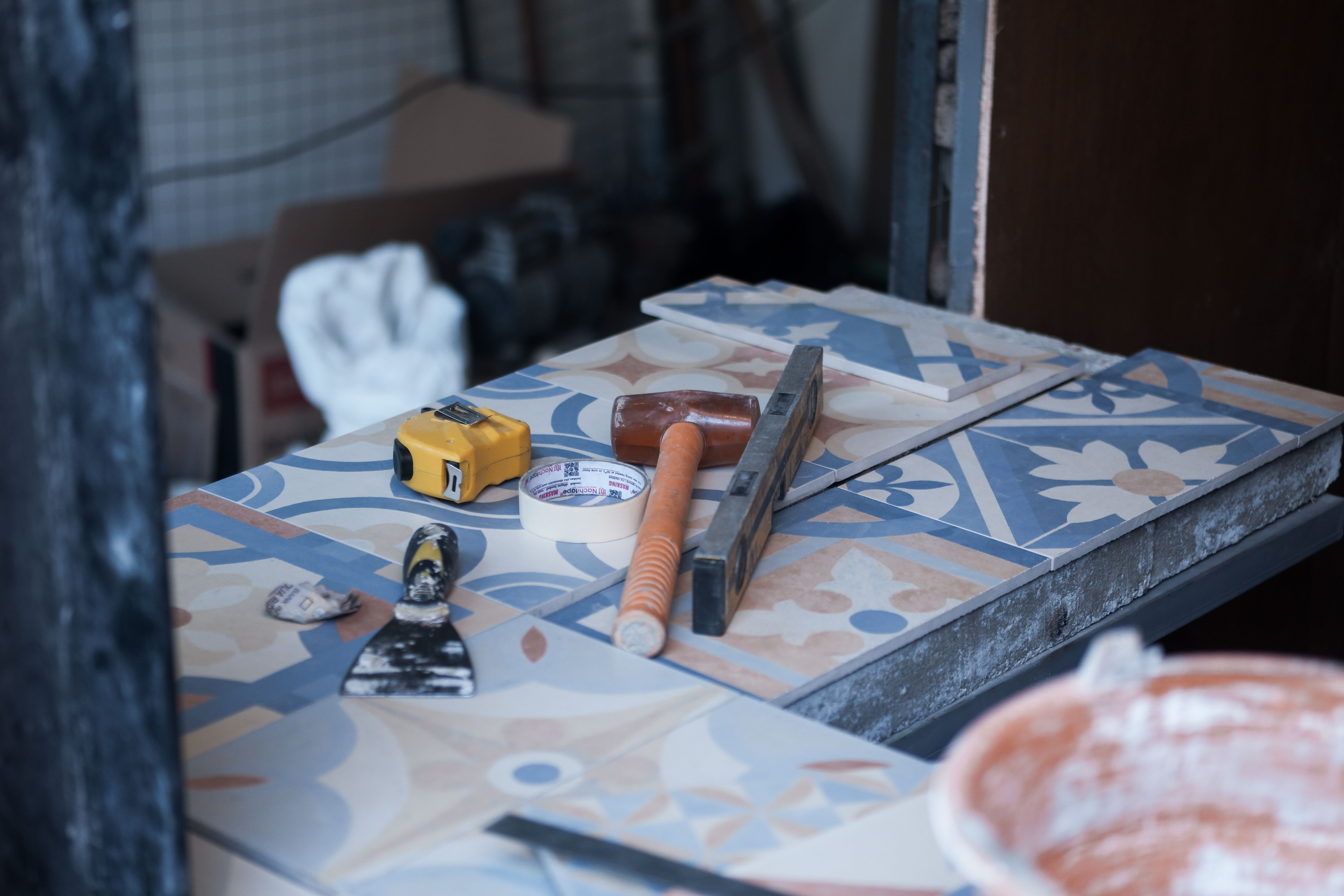
Patterned tiles, tape measure, mallet, level and scraper on a workbench.
FIELD 02 · WHERE IT FITS AND WHAT CHANGES THE SCOPE
Tiling and flooring are part of most rooms I renovate. In bathroom renovations, they’re the last layer over a lot of careful preparation. In kitchen renovations, it might be a splashback or a new floor, and laundry renovations often need both. The same preparation sits behind plasterboard, plastering and painting.
The work needed depends on the condition of the floor or wall. Some surfaces only need cleaning and priming. Others need repairs before tiling can start. I’ll explain what I think is needed, why I’d do it that way and anything that might limit the result.
If your job involves regulated plumbing, electrical or other licensed work, appropriately licensed specialists do that part and I coordinate with them. See Working with Licensed Specialists. Quotations depend on the assessed scope, materials and existing conditions. The Assessment and Quotation Process page explains how that works.
03
FIELD 03 · WHAT YOU SEND ME
— Your suburb, and which room or area it is
— A short description of what’s there now and what you’d like
— One wide photo of the whole area
— Close-ups of anything cracked, loose, uneven or water-marked
— The rough size of the floor or wall, if you know it
Photos can be emailed to [email protected]. For more pointers, read What to Include When You Send a Message.